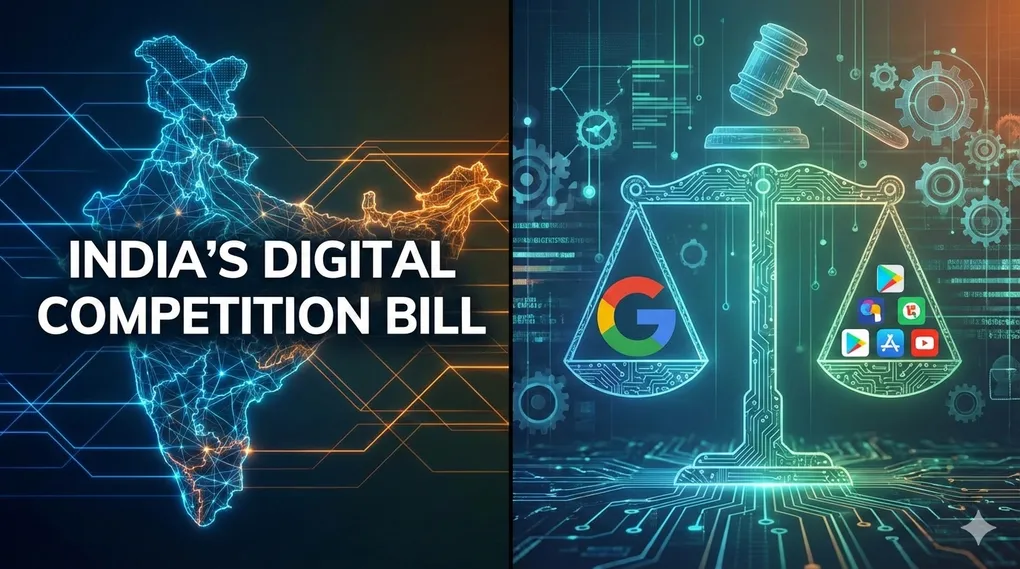
India’s Digital Competition Bill: A Step Towards Fair Competition in the Digital Age
Addressing Anti-Competitive Practices by Big Tech
India’s digital landscape is rapidly evolving, necessitating robust measures to ensure fair competition and innovation. The Digital Competition Bill(DCB) is a step towards achieving this goal.
Growing India Digital Market
- 759 million active internet users in 2022(up from 499 million in 2018)
- UPI platform processed 83760 million transactions, aggregating 16.35 Trillion USD worth of value.
- Digital Public Goods like Aadhaar,UPI, and ONDC driving innovation
- IT services industry, which grew from under USD 100 million to USD 250 billion in revenue in barely three decades
Unique Features in Digital Markets
Key Features of Digital Markets
- Data as a Resource
- Data-Driven Network Effects
- Economies of Scale
These features foster rapid growth but also create challenges in market concentration and competition.
Existing Regulatory Framework
Important Current Regulatory Landscape
- FDI Policy: Limited to certain anti-competitive conduct in e-commerce
- IT Rules, SPDI Rules, Digital Personal Data Protection Act, 2023
- Draft National Data Governance Framework Policy
- Consumer Protection Acts and E-Commerce Rules
- RBI Directions on Prepaid Payment Instruments
These regulations are insufficient for addressing the complex nature of large digital platforms. Committee analyzed 11 existing Indian rules and Anti trust law in 11 countries like EU, UK,Germany, USA,Japan,Australia,China,South Korea,Canada,Taiwan,Singapore
Identified Anti-Competitive Practices
Top 10 Anti-Competitive Practices by Big Tech
- Anti-steering
- Platform Neutrality/ Self-Preferencing
- Adjacency/ Bundling and Tying
- Data Usage(Use of Non-Public Data)
- Pricing/ Deep Discounting
- Exclusive Tie-Ups
- Search and Ranking Preferencing
- Restricting Third-Party Applications
- Advertising Policies
- Acquisitions and Mergers
Need for a Separate Law
Why a Separate Digital Competition Law?
Complement Ex-Post Enforcement:Enhance the existing framework Timely Detection and Enforcement:Address anti-competitive practices swiftly Balance Regulation and Innovation:**Foster a competitive yet innovative market environment
Key Recommendations from the Committee
- Introduction of Ex-Ante Measures
- Scope and Applicability: Targeting Core Digital Services
- Regulation of SSDEs: Systemically Significant Digital Enterprises
Criteria for SSDEs:
- INR 4000 crore turnover in India
- USD 30 billion global turnover
- INR 16,000 crore GMV
- USD 75 billion global market capitalization
- 10 million end users or at least 10,000(ten thousand) business users in India
Obligations and Exemptions
Tailored Obligations and Exemptions
- Different obligations based on business models and user base
- Statutory grounds for exemptions
Enforcement and Remedies
- Borrow procedural framework from the Competition Act Cap penalties at 10% of global turnover for non-compliance
Market Reaction
- More than 40 Indian start-ups have come out strongly in support of the draft DCB Request fo an upward revision of the thresholds for designtaing SSDEs Big Tech firms have expressed serious concerns over the DCB
- US lobby group representing tech gaints i.e) Google, Amazon, Apple and Microsoft urged India to reconsider it’s EU-like ex-ante approach
Whats next?
- Tomorrow 13th Jun 2024 Indian government calls for a key meeting on the DCB Representatives from associations like IAMAI,Nasscom, FICCI and Assocham are expected to attend 18th Jun 2024 another meeting with industry representatives is expected
- It is very intersting area to watch out for.
What do you think about DCB?
LEAVE A COMMENT BELOW`